

Can Laser Machines Mark on Curved Surfaces?
Author:Betop laser
Click:
Time:2024-06-20 02:13:25
Laser technology has revolutionized surface marking and engraving, demonstrating exceptional precision and adaptability. When considering curved surfaces, the complexities of maintaining accuracy and consistency become paramount. Understanding the nuances of laser marking on such surfaces involves a blend of techniques, tools, and systems designed for this specific application.
Tools and systems used for curved surface marking
A. Focusing Optics and their Role
Focusing optics play a pivotal role in laser systems dedicated to curved surface marking. These optics, often equipped with adjustable focal lengths or positions, ensure the laser beam converges accurately onto the curved surface. By maintaining the optimal focus despite surface curvature variations, they enable precise and uniform marking. The focusing optics are widely used in different kinds of laser marking machine.

B. Dynamic Focusing Mechanisms for Maintaining Precision
Innovations in laser technology have introduced dynamic focusing mechanisms. These mechanisms constantly adjust the focal point in real-time as the laser moves along the curved surface. This continuous adaptation mitigates the impact of varying curvatures, ensuring consistent depth and clarity of marks.
C. Rotary Devices for Marking Cylindrical Objects
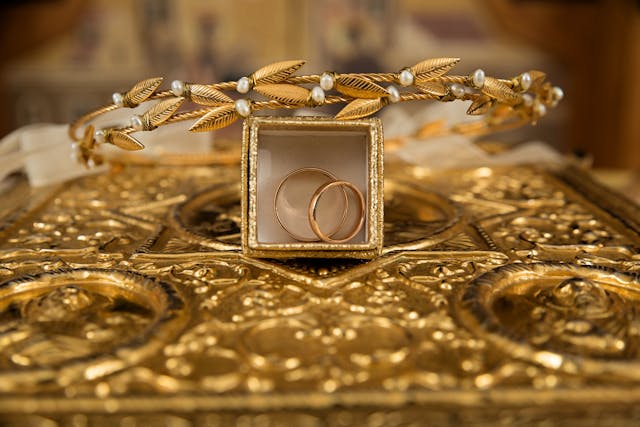
For cylindrical objects like pipes or jewelry items, rotary attachments prove indispensable. These fixtures rotate the object while the laser precisely marks its surface, ensuring uniformity around the circumference. This technique is vital in the jewelry industry, where intricate designs and personalized engravings on curved surfaces of rings demand both precision and consistency.
Laser marking on curved surfaces necessitates a synergy of these tools and systems, each catering to specific challenges posed by varying curvatures. Innovations in optics, dynamic focusing, and rotary devices have expanded the scope of laser marking onto curved surfaces, enabling applications across diverse industries.
Considerations and Parameters for Curved Surface Laser Marking
Achieving precise and consistent results in laser marking on curved surfaces hinges upon meticulous considerations and calibrated parameters. The process demands attention to various factors to ensure accuracy and maintain the integrity of the marked surface.
Different materials exhibit distinct responses to laser marking. Understanding material properties is crucial in determining optimal laser settings, preventing surface damage, and ensuring the durability of the mark. For instance, in the medical device industry, where curved surfaces of surgical instruments require marking, careful material selection aligns with stringent sterilization protocols while maintaining marking integrity.
Achieving precision, consistency, and calibration in laser marking on curved surfaces demands an intricate understanding of parameters and materials. This meticulous approach guarantees accurate, durable, and industry-compliant marks across various applications, even on the most challenging curved surfaces.
Getting the laser settings just right—adjusting the power, frequency, and speed—makes all the difference. It's like finding that perfect balance, making sure the laser dances just right on the curved surface to create marks that are clear and long-lasting. But it's not just about power; it's also about focusing. We've got to finesse that focal point, keeping it precise across those curves to ensure every mark shines consistently. And as the laser glides along the surface, it's about keeping that movement smooth and steady, ensuring each mark looks just as good as the last. It's a bit like finding the sweet spot. Testing and tweaking, making those small adjustments—that's the secret. It's all about finding that perfect setup for each material and curve to create marks that really stand out.
Clean and properly treated surfaces enhance the adherence and visibility of marks. For instance, in aerospace applications, surface preparation methods like chemical treatments or coatings are crucial to attain durable and legible markings for traceability. Also, compliance with regulations, such as those in the electronics industry for serial numbers or authenticity markers on curved casings, requires adherence to specific marking guidelines while maintaining surface integrity.
Achieving precision, consistency, and calibration in laser marking on curved surfaces demands an intricate understanding of parameters and materials. This meticulous approach guarantees accurate, durable, and industry-compliant marks across various applications, even on the most challenging curved surfaces.

In the quest for precision and reliability in laser marking and engraving for your business, the choice of equipment becomes paramount. Betop Laser stands out as a trustworthy partner in this journey. Our commitment to innovation and quality ensures that our laser marking and engraving machines deliver consistent, accurate, and durable results, even on the most challenging curved surfaces. With our cutting-edge technology and dedication to meeting diverse industry needs, Betop Laser remains a reliable choice, empowering your business to achieve impeccable marking and engraving standards. Trust Betop Laser for excellence in laser machinery that elevates your business's capabilities.

点击右上角
分享给朋友吧







 Long by picture save/share
0
RELATED RESOURCES
-

How can laser marking color on metal material?
-
How to Repair the Mold Damages with Laser Welder
-
Laser Machines for Jewelry Making
-
Betop Handheld Laser Welder
-
Brief Introduction for safety measures for customized Class I Laser marker from Betop Laser
-
Laser Marking in the Electronics & Semiconductors Industry
-
Can Laser Machines Mark on Curved Surfaces?
-
Boost Your Production with Laser Automation Solutions
-
Laser Marker ODM (Original Design Manufacturing) Service from Betop Laser
-
Why Chinese Laser Machines Are Much Cheaper Than Those Made in Europe and the USA





CONTACT US
Office Address: Pin'ao Industry, Fucheng, Longhua District, Shenzhen, P.R.China
Tel: +86 137 1463 0437
WhatsApp: +86 137 1463 0437
E-mail: Sales@betoplaser.com


© Betop laser All Rights Reserved
